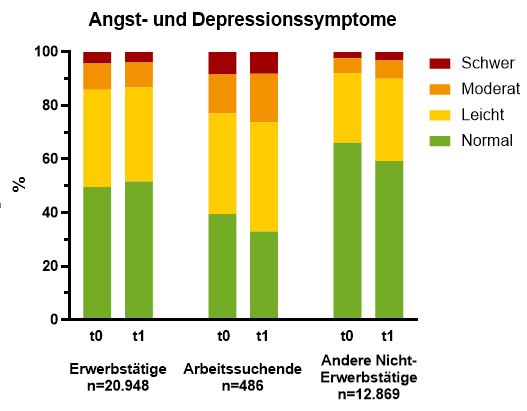
Early in the COVID-19 pandemic, it became apparent that the risk of infection varied depending on occupation and was associated with greater psychological distress. To assess the situation after the end of the pandemic, we invited all DigiHero participants to take part in a survey about their occupation and well-being in November and December 2023. We investigated how occupation and working conditions were associated with symptoms of anxiety and depression, both during the survey period at the end of 2023 and retrospectively during the Omicron wave in early 2022.
In total, we were able to analyze data from 34,303 participants.
The key findings:
1. Frequency of Psychological Complaints
Approximately 12% of participants reported elevated symptoms of anxiety and depression at both time points. The most pronounced symptoms were reported by people seeking employment, while the lowest levels were found among other individuals not in employment, most of whom were retirees (see figure).
2. Differences Between Occupations
Symptoms remained largely stable over time. Nevertheless, differences between occupational groups were observed: at the end of 2023, employees in the transport and logistics sector were more severely affected. Looking back at the Omicron wave in early 2022, this was particularly true for healthcare workers.
3. Importance of Working Conditions
Personal stressors and life circumstances were more strongly associated with psychological complaints than occupation itself. These included work-related stress, conflicts between work and private life, high levels of work commitment, and loneliness in the workplace. Women reported more pronounced symptoms than men.
Conclusion
Work-related psychosocial stressors had a greater impact on mental health than the occupation itself. Since these factors can be specifically addressed, they offer important opportunities for reducing psychological distress in the workplace.
The findings of our investigation were published in an English-language scientific journal. The study and publication were led by our Bochum-based project partner, the Institute for Prevention and Occupational Medicine of the German Social Accident Insurance (DGUV), Institute of Ruhr University Bochum (IPA).